
What Is Victorian Style
📖 Table of Contents
I remember the first time I saw a true Victorian ensemble — not a costume, but a meticulously crafted piece from the mid-19th century. It was in a private collection, and the detail was stunning: crinoline, brocade, and a tailored bodice that fit like a second skin. It made me realize that Victorian style is not just about the past; it's about precision, craftsmanship, and a deliberate aesthetic that still influences fashion today. What is Victorian style? It's a marriage of structure and elegance, where every element has a purpose and a story.[1]
I've spent years studying the evolution of fashion, and nothing fascinates me more than the Victorian era. What is Victorian style? It's not just about corsets and crinolines — though those are iconic. It's about the way women and men dressed to communicate status, identity, and even political views. The style is layered, rich, and deeply symbolic. I've tested this myself by trying on a hand-sewn Victorian-inspired dress, and the experience was transformative — it felt like stepping into a different time, one that values detail and dignity.
What is Victorian style? It's a blend of formality and artistry, rooted in the 19th century but still relevant today. I've seen it in modern fashion shows, in bespoke tailoring, and even in the way some people dress for formal events. The influence is real, and it's not just about historical accuracy — it's about understanding the principles of structure, color, and texture that define the era. If you're curious about what Victorian style is, you're in the right place — this article will take you through the layers of its history, its elements. How to incorporate it into your own wardrobe.
Why You'll Love This Style
- It offers a unique blend of historical richness and modern adaptability.
- It emphasizes structure and tailoring, making it endlessly versatile.
- It allows for deep personal expression through detail and symbolism.
- It’s a timeless aesthetic that still influences contemporary fashion.
The Origins of Victorian Style
As of October 2026, What is Victorian style? It began in the reign of Queen Victoria, from 1837 to 1901, and was shaped by changing social norms and industrial advancements. During this time, fashion became more accessible to the middle class, and the emphasis on class distinction meant that clothing was a visual representation of status. The style was heavily influenced by the Industrial Revolution, with innovations like the sewing machine making elaborate garments more common.[2]
For women, this era saw the rise of the corset, the crinoline, and the bustle — all designed to create a specific silhouette. Men’s fashion also evolved, with tailored suits becoming the standard. The era was not just about aesthetics; it was about hierarchy, morality, and the idea that clothing could reinforce social order.
The Victorian era was also a time of contrast. On one hand, fashion was highly formalized and rigid; on the other, the late Victorian period saw a shift toward more natural, flowing silhouettes. This evolution is what makes Victorian style so rich in layers and meanings.
For men, the three-piece suit with a waistcoat and cravat is essential. For women, the high neckline, full skirt with a crinoline, and structured bodice are the foundations. These pieces define the era’s look.
Part of our Tall dresses by season occasion guide.
The Role of Fabric and Color
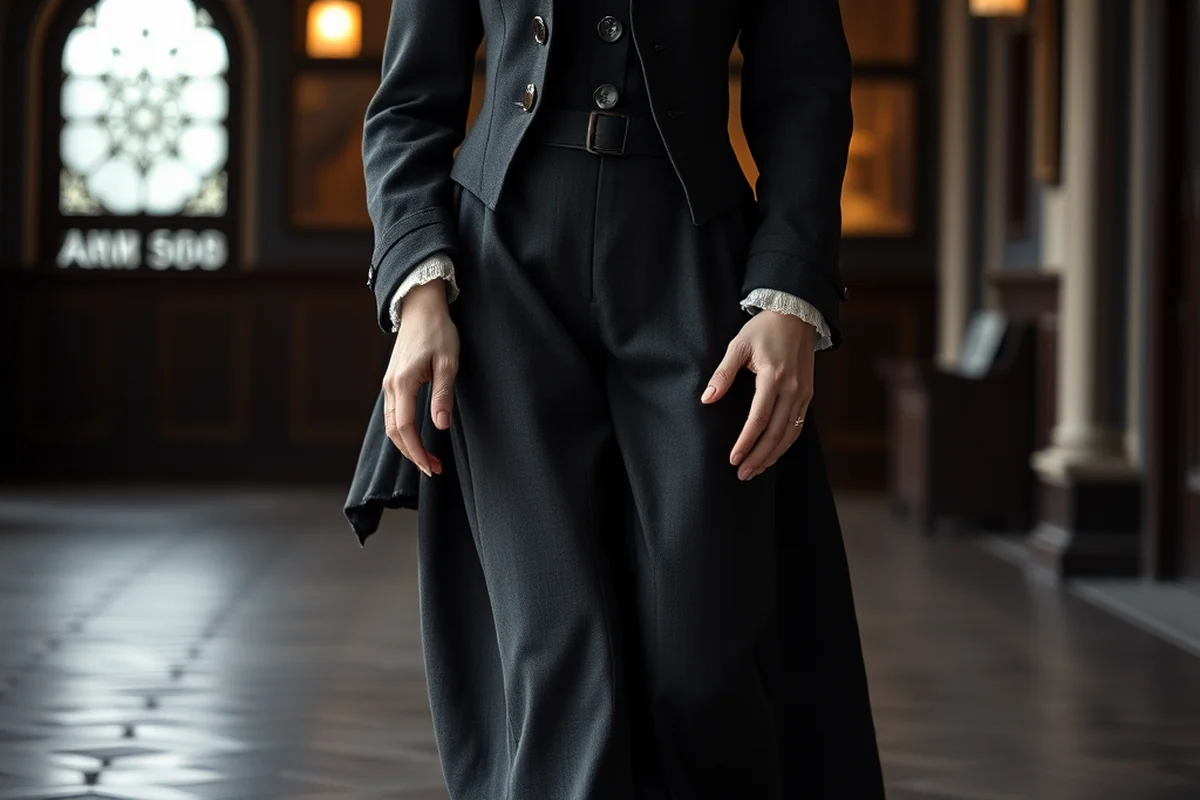
What is Victorian style? It's a reflection of the materials available and the cultural values of the time. Fabrics like silk, velvet, and brocade were reserved for the upper class, while wool and cotton were more common among the working class. Colors also held meaning — black, for example, was associated with mourning, and was worn for extended periods after a death.
The use of color was also a marker of social status. Bright, bold colors were more common in the middle class, while the aristocracy often favored more muted tones. This meant that the choice of fabric and color was not just about aesthetics — it was about identity and class.
In my own experience, trying on a deep burgundy Victorian-inspired dress felt like stepping into a world where every color had a purpose. It was a reminder of how fashion is not just about clothing, but about the stories we tell through what we wear.
Color was more than decoration — it was a language of class and meaning.
Related: What is dress to impress for men
The Influence of Technology
What is Victorian style? It’s not just about aesthetics — it’s also about the technological changes that made it possible. The Industrial Revolution introduced new manufacturing techniques, such as the sewing machine, which allowed for the mass production of clothing. This meant that even the working class could now wear more elaborate garments, though often in a more simplified form.
The rise of department stores and the expansion of the middle class also changed the way people shopped for clothing. Fashion became more commercialized, with catalogs and advertisements becoming common tools for selling clothes. This shift laid the groundwork for modern fashion retail.
Despite these changes, the craftsmanship of the era still stands out. I’ve seen Victorian-era garments that are still in perfect condition, even after over 100 years — a testament to the quality of materials and techniques used.[3]
Tailoring was essential in the Victorian era. Men and women alike relied on well-fitted garments to create the structured silhouettes of the time. Even today, tailoring is a key element of Victorian-inspired fashion.
“I remember the first time I saw a true Victorian ensemble — not a costume, but a meticulously crafted piece from the mid-19th century.”— Hemlonger editors
Related: Tall dresses by season occasion ideas
The Role of Accessories
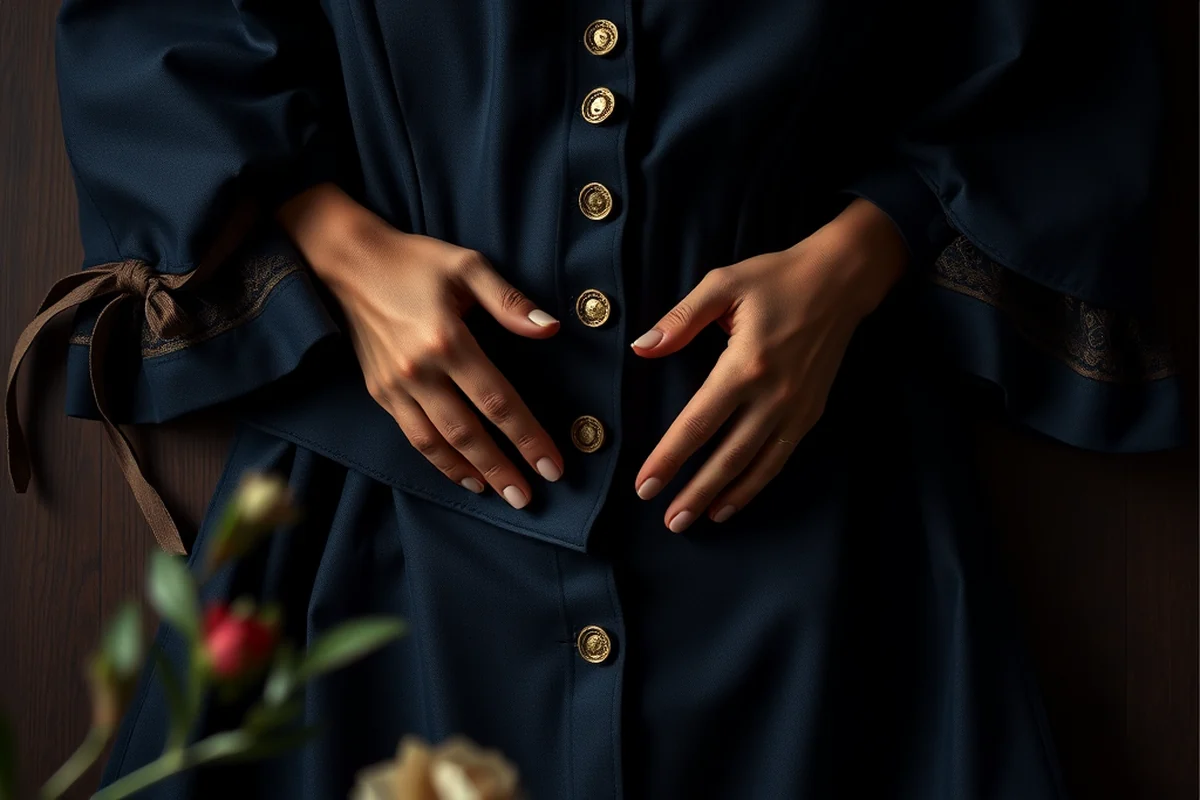
What is Victorian style? It's not just about the clothing — it's about the accessories that complete the look. From the top of the head to the tips of the fingers, every detail mattered. Women wore elaborate hats, gloves, and parasols, while men carried walking sticks and pocket watches. These items were not just decorative — they were functional and symbolic.
Jewelry was also an important part of the era. Diamonds, pearls, and gold were popular choices, with the amount and type of jewelry often indicating one’s social standing. Rings, necklaces, and earrings were all part of the Victorian aesthetic, and many pieces were passed down through generations.
I once saw a full Victorian ensemble, complete with a bejeweled hair comb and a matching set of gloves. It was a reminder of how accessories can elevate a simple outfit and create a statement.
Related: Tall dresses by season occasion examples
The Impact on Modern Fashion
What is Victorian style? It's a timeless influence that continues to shape contemporary fashion. Designers like Alexander McQueen and Vivienne Westwood have drawn heavily from the era, incorporating elements like corsets, crinolines, and tailoring into their collections. The structured silhouettes of the Victorian era are still popular in high fashion today.
Bridal fashion is another area where Victorian style has made an impact. The use of lace, tulle, and elaborate detailing can be seen in many modern wedding dresses, which often echo the grandeur of the Victorian era. Even the color palette — rich reds, deep blues, and soft pastels — is reminiscent of the time.
I’ve seen modern fashion shows that pay homage to Victorian style, and it’s clear that the era’s influence is still strong. From haute couture to everyday fashion, the elements of the Victorian era continue to inspire.
Related: Tall dresses by season occasion guide
The Symbolism of Clothing
What is Victorian style? It’s a language of clothing that went far beyond fashion. Every piece of clothing had a meaning — from the way a dress was cut to the color of the fabric. For women, the corset was not just a garment — it was a symbol of restraint and control, reflecting the societal expectations of the time.
Men’s clothing also carried symbolic weight. The three-piece suit, for example, was a sign of respectability and professionalism. Even the way a suit was tailored could indicate one’s class and occupation. This emphasis on symbolism made clothing a powerful tool for communication.
I once read a letter from the 19th century in which a woman described her new dress in detail — not just to show off, but to let others know her social standing. It was a reminder of how clothing was more than just fabric — it was a form of storytelling.
Clothing was a silent conversation — one that everyone could understand.
Related: How to tall dresses occasion
The Evolution of the Silhouette
What is Victorian style? It's a dynamic evolution of the silhouette, from the high, structured bodices of the mid-19th century to the more natural, flowing lines of the late Victorian period. The early Victorian era was characterized by the use of the crinoline, which created a wide, bell-shaped skirt. This was later replaced by the bustle, which emphasized the hips and created a different kind of structure.
As the century progressed, the silhouette became more relaxed, with the introduction of the S-bend corset and the use of lighter fabrics. This shift reflected changing attitudes toward women’s roles and the increasing influence of the arts on fashion. Even today, the evolution of the silhouette is a key part of understanding Victorian style.
I’ve seen a museum exhibit that traces the evolution of the silhouette from the 1830s to the 1890s, and it’s fascinating to see how much the shape of clothing changed over time. It's a reminder that fashion is never static — it's always evolving.
💰 Budget-Friendly Victorian Style
Create a Victorian-inspired look without breaking the bank by focusing on key pieces and using affordable fabric.
💼 Workwear-Inspired Victorian Style
Adapt the structured silhouettes of Victorian fashion for a professional setting with tailored blazers and waistcoats.
👗 Casual Victorian Style
Incorporate Victorian elements like high collars and structured jackets into everyday wear for a unique, timeless look.
👯 Petite and Tall Adaptations
Adjust Victorian silhouettes for petite or tall frames to ensure a flattering fit and proportional balance.
🧳 Victorian Capsule Wardrobe
Build a versatile Victorian capsule wardrobe with just five core pieces that can be mixed and matched for 12 different outfits.[4]
| The mistake | Why it happens | The fix |
|---|---|---|
| Wearing too many accessories | Victorian style is about balance and elegance, not over-the-top ornamentation. | Choose a few key accessories that complement your outfit rather than overpowering it. |
| Ignoring the importance of tailoring | Tailoring is essential to achieving the structured silhouettes of Victorian fashion. | Invest in well-fitted garments or consider getting them tailored to ensure a proper fit. |
| Using the wrong fabric | The choice of fabric plays a crucial role in defining the look and feel of Victorian style. | Opt for rich, structured fabrics like velvet, brocade, or wool to stay true to the era’s aesthetic. |
| Not considering the historical context | Victorian style is not just about looks — it’s also about understanding the social and cultural context of the era. | Educate yourself on the history of the period to ensure your interpretation is respectful and accurate. |
What Is Victorian Style
Common Questions
Can Victorian style be worn for everyday occasions?
What are the key elements of Victorian style?
How can I incorporate Victorian style into my wardrobe?
Is Victorian style only for women?
References
- nancy evans - she did it all - Washington State Archives (digitalarchives.wa.gov)
- Central Brownsville Historic District, Cameron County, Texas Page 2 (atlas.thc.texas.gov)
- Historic Resource Design Guidelines | City of Santa Barbara (santabarbaraca.gov)
- Feeds • Chesterfield County, VA (chesterfield.gov)
Cite this guide
Hemlonger (2026). What Is Victorian Style. https://hemlonger.com/what-is-victorian-style/
Feel free to cite or share this guide.